
Blogs

Why We Built CoreSeven: Our Journey from Boutique Consultancy to Systemic Mental Fitness
Why We Built CoreSeven: Our Journey from Boutique Consultancy to Systemic Mental Fitness
For a long time, the world of workplace wellbeing has felt a bit like a game of catch-up. We wait for the burnout to happen, then we offer a subscription to a meditation app. We wait for the team conflict to reach a breaking point, then we call in a mediator. We wait for the crisis, and then we react.
At Inspire You Wellbeing, we’ve spent years working as a boutique consultancy, sitting at the intersection of HR, coaching, and therapy. We’ve seen firsthand how pressure at work and the complexities of real life: parenting, neurodiversity, trauma, and health: don’t stay neatly outside the office door.
But as we grew, we realised that while deep, bespoke consultancy is powerful, the scale of the challenge required something more systemic. We needed a way to help organisations move from a culture of "crisis management" to one of "proactive mental fitness." We need something affordable, accessible and easy to guide people without being preachy or commanding hours of therapy.
That is why we built CoreSeven.
From Boutique to Systemic: The Evolution
When we started, our mission was simple: help people assess where the problem is, feel better so they can work better. We worked with self development enthusiasts, wellbeing partners, leadership teams, parents, and schools, providing high-touch, human-centred support. However, we noticed a recurring pattern. Even the most well-meaning organisations were often treating wellbeing as a "perk" or a "reactive safety net" rather than a core business strategy. Individuals had good intentions but were not accountable to commit to changes and didn't know where to start or what the journey looked like.
We wanted to bridge the gap between business performance and emotional wellbeing. We knew that ways to create meaningful change required a shift in how we view the human nervous system in the workplace.
CoreSeven is the culmination of that journey: a systemic mental fitness platform designed to build resilience before it’s needed. What began five years ago as an assessment tool gradually evolved into something much bigger. First came a static membership platform. Then a more gamified version. Last year, we built it into the back of our website as the thinking continued to sharpen.
Over time, it became clear that CoreSeven was asking for its own space. It is no longer a feature sitting quietly inside Inspire You. It has grown into a standalone platform with its own domain, its own website, and a clearer, more professional identity.
As CoreSeven evolved, we realised it had grown beyond being simply a service within Inspire You. It had become its own ecosystem, methodology and long-term vision for how mental fitness could be approached differently.
Creating a separate platform and domain allowed us to build something bigger than traditional wellbeing support alone: a scalable, accessible system that could support both individuals and organisations in a more proactive and sustainable way.
Prevention over Crisis: The New Priority
The current "crisis-first" model is exhausted. HR teams are overwhelmed, managers are burnt out, and employees often feel that wellbeing support only arrives when they are already at their limit. Health and support systems are increasingly overwhelmed, with many people struggling to access support until they are already in crisis. During our time working in the NHS, we heard a version of the same sentence again and again: "I wish I had help sooner."
Our "Prevention over Crisis" mission is about moving upstream. It’s about recognising that by the time someone needs a crisis line, a lot of opportunities for support have already been missed. By focusing on mental fitness, we can build the internal resources: the "muscles": that allow people to navigate stress, uncertainty, and high-pressure environments without reaching a breaking point.
What Do We Mean by Mental Fitness?
We often talk about physical fitness as something we "do" to stay healthy, not just something we think about when we get sick. Mental fitness is exactly the same.
It isn't just the absence of mental illness; it is the proactive building of the inner and outer capacities that help us navigate life well. In our mental health awareness reflections, we often discuss how true wellbeing isn't a destination, but a practice.
At the heart of CoreSeven are 7 interconnected Rhythms of life and wellbeing. Because mental fitness is not built through one single habit, app, or intervention. It is shaped through the interaction between how we think, move, recover, connect, work, grow, and navigate change. The 7 Rhythms of Life are:
- Physical: Sleep, Movement, Nutrition
- Emotional: Awareness, Regulation, Resilience
- Growth: Mindset, Identity, Learning
- Social: Connection, Belonging, Communication
- Financial: Spending, Earning, Security
- Occupational: Satisfaction, Progress, Balance
- Transitional: Change, Loss, Adaptation
Each rhythm, or Beat, also has four levels: Awareness, Consistency, Performance, and Mastery. This is an important part of the platform’s systemic design. It means CoreSeven is not simply offering isolated wellbeing ideas or one-off interventions. It helps people and organisations understand where they are now, build steady foundations over time, strengthen performance in a sustainable way, and develop deeper long-term capability across every area of life.

Human-Centred Leadership in Practice
Building a platform didn't mean we wanted to lose our "human-centred" touch. If anything, it allowed us to embed it more deeply. Human-centred leadership isn't about being "soft"; it’s about being smart. It’s about acknowledging that a leader who understands their own nervous system is a leader who can hold space for a high-performing, psychologically safe team.
We believe that sustainable performance is only possible when we stop treating work life and real life as separate entities. When an employee is struggling with family pressures or neurodivergent burnout, they don't leave that at the door. CoreSeven helps organisations build a culture where these realities are seen and supported, creating a more resilient and loyal workforce.
A Holistic Ecosystem of Support
We’ve always known that wellbeing doesn't happen in a vacuum. It happens in our kitchens, our communities, and our local high streets. That’s why our approach to mental fitness includes a wider ecosystem of support. We call this "Glocal."
For us, Glocal means thinking globally about what people need, while building support locally and relationally. We are proud to be based in Sussex and to partner with local businesses and practitioners who share our values around holistic health and human-centred support. Further afield, we draw on a wider network of aligned partners so people can access the right support close to where they are. It means we can stay rooted in community whilst offering something responsive, personal and joined-up.

The Path Forward

The transition from a boutique consultancy to a systemic platform has been a journey of listening. We listened to exhausted HR directors, overwhelmed parents, people trying to hold everything together quietly, and organisations wanting to do better but not always knowing where to start.
We believe the most powerful changes often start with the person sitting right in front of us. That is the heart of the Ripple Effect. When one person builds awareness, resilience and healthier rhythms, that change rarely stays contained to them alone. It often ripples outward into families, teams, workplaces and communities. In that sense, supporting personal growth is not separate from wider organisational change. It is often how meaningful, lasting change begins.
CoreSeven is our answer. It is a commitment to individual self development and wider organisational workplace wellbeing strategies that actually work because they are rooted in how humans actually function. There is a clear journey.
It’s time to stop waiting for the crisis. It’s time to start building the fitness.
Ready to move from crisis management to mental fitness?
We are currently inviting a select group of purpose-driven leaders and individuals to join our Founding Members list. As a founding member, you’ll be the first to access the platform and receive exclusive benefits as we build the future of systemic wellbeing together.
Join the Founding Members List here
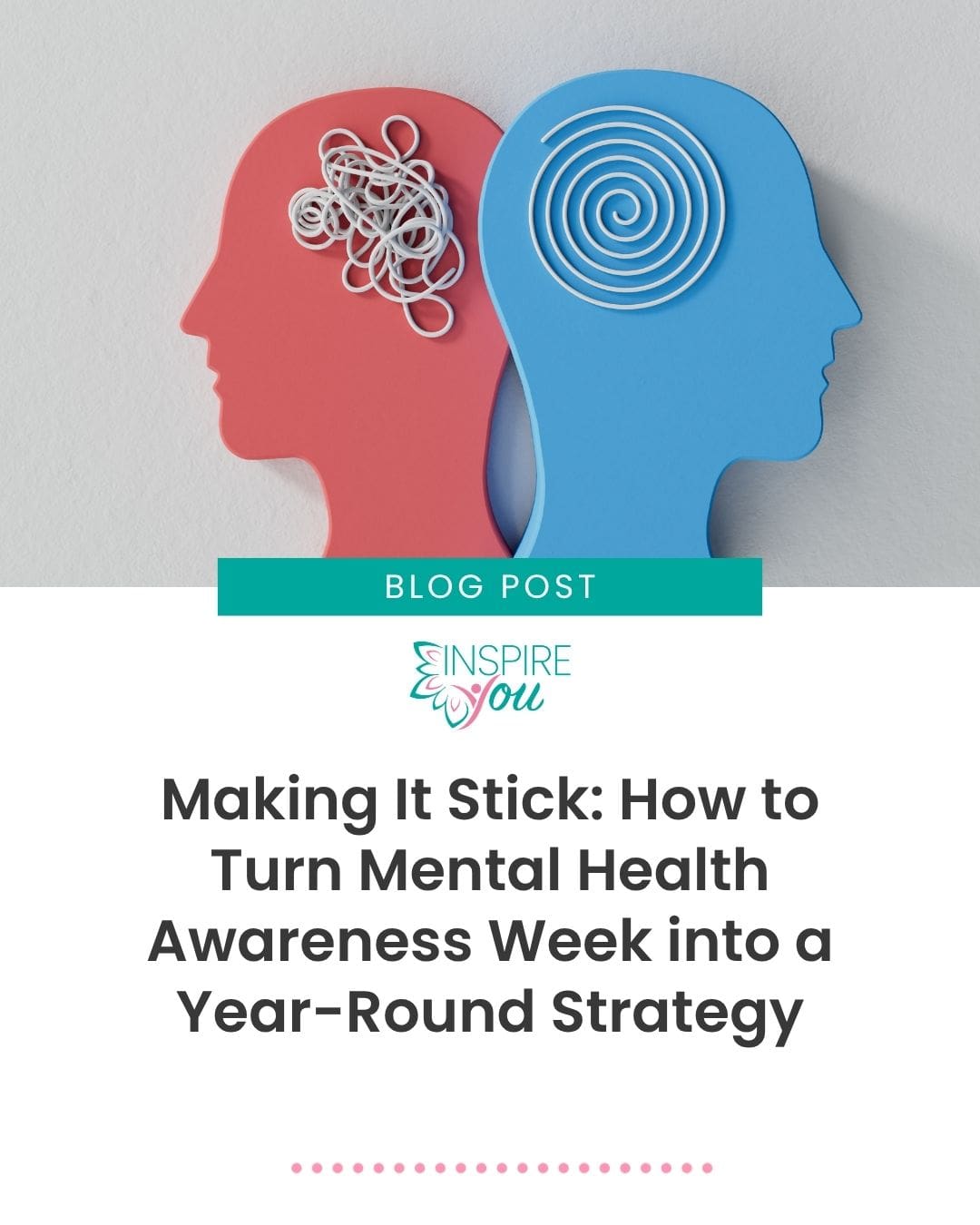
Making It Stick: How to Turn Mental Health Awareness Week into a Year-Round People Strategy
Making it Stick: How to turn Mental Health Awareness Week into a Year-Round People Strategy

An authentic team collaboration image that reflects the shift from one-off awareness activity to a more joined-up, year-round people and culture strategy.
Mental Health Awareness Week (MHAW) often feels like a whirlwind. For many HR professionals and business owners, it’s a week of high energy, guest speakers, workshops, and perhaps a few courageous conversations. But as the banners come down and the calendar flips to Monday morning, a familiar sense of "what now?" often sets in.
It is common to feel a bit of a "hangover" after a concentrated week of awareness. You’ve put in the effort, you’ve shared the resources, and you’ve opened the floor. Yet, for many leaders, there is a lingering worry: Was that just a tick-box exercise? How do we keep this conversation alive when the pressure of "business as usual" returns?
The truth is, while awareness is a vital starting point, it isn’t a destination. Real, lasting change doesn't happen in a single week in May. It happens in the quiet, consistent rhythms of your workplace culture throughout the rest of the year.
If you’re feeling like your recent initiatives didn’t quite get the "loud" engagement you hoped for, or if you’re wondering how to weave these themes into the very fabric of your business, this is for you. It’s time to move from ad-hoc activities to a cohesive, sustainable people and culture strategy.
The Engagement Gap: Why "Quiet" Doesn't Mean "Failed"
One of the biggest frustrations for people-focused leaders is the engagement gap. You might host a workshop for 200 people and only 20 show up. Or you might create a space for feedback and find that very few people are willing to speak up or share their experiences.
It’s easy to feel disheartened by this, but it’s important to look beneath the surface. Low engagement isn't always a sign of apathy; often, it’s a sign of a lack of psychological safety at work.
For many employees, the "thinking part" of their brain knows the support is there, but their nervous system might still feel cautious. They might be watching from the sidelines, absorbing the information without feeling ready to participate publicly. If your team is under high pressure, their capacity for "one more thing": even a wellbeing thing: might be limited.
The goal isn't necessarily to get every single person to post on a digital board or join every webinar. It's about creating a culture where they know the support is a permanent fixture, not just a seasonal trend. To do that, we have to move away from the "event" mindset and toward a "strategic" mindset.

Step 1: Culture Mapping - Understanding the "Why" and the "Where"
Before adding more workshops or activities, it’s essential to understand the current landscape of your organisation. This is where culture mapping comes in.
At Inspire You, we often talk about ways to create meaningful change by looking at the invisible dynamics of a team. Culture mapping is a process of identifying the "unspoken rules" of your workplace.
- Do people feel they can take a full lunch break without judgment?
- Is there a "hero culture" where overworking is rewarded?
- How do leaders role-model boundaries and nervous system regulation?
- Where are the gaps between what the company says it values and what employees actually experience?
By mapping these dynamics, you stop guessing and start addressing the root causes of burnout and disengagement. It allows you to see wellbeing not as a perk, but as an integrated part of your organisational development. This involves talking to the teams, staff surveys and really understanding the business.

Culture mapping is not just about meetings and plans. It is about noticing the everyday human dynamics, habits and unspoken rules that shape how a workplace actually feels.
Step 2: Moving from Ad-Hoc to Strategy
Most businesses have a "wellbeing list": an EAP, some Mental Health First Aiders, and the occasional yoga session. These are all great tools, but without a cohesive people and culture strategy, they often feel like disjointed patches on a larger problem.
A strategy isn’t a 50-page document that sits in a drawer. It’s a roadmap that connects your business goals with the emotional wellbeing of your people. It identifies:
- The Infrastructure: Who is responsible? (e.g., Wellbeing Champions, HR leads, Leadership).
- The Measurement: How do we know it’s working? (e.g., Staff surveys, turnover rates, absence data).
- The Rhythm: What is our consistent "operating rhythm" for the year?
When wellbeing is ad-hoc, it feels optional. When it’s strategic, it becomes "the way we do things here."

Beyond the Fruitbowl’ graphic creates a direct link between this blog and the wider social media campaign about moving from snacks and one-off gestures to sustainable systems.
Step 3: Integrating the Feedback Loop
To make a strategy "stick," it has to be built with your people, not just for them. This is where staff surveys and integrated feedback loops become powerful.
However, a survey is only as good as the action that follows it. If you ask your team for feedback and they don’t see any change, engagement will drop even further next time. The "Inspire You" approach involves:
- Identifying Gaps: Using data to see where the pressure points are (e.g., specific departments experiencing pressure at work).
- Facilitating Discussions: Moving from a tick-box survey to actual human conversation where people feel heard.
- Closing the Loop: Explicitly telling your team: "You told us X, and because of that, we are doing Y."
This transparency builds the psychological safety required for deeper engagement. It shows that you aren't just "aware" of mental health; you are actively managing the environment that impacts it.
Step 4: Building the Structure (Beyond the CEO)
While strategy starts at the top, it lives in the middle and on the ground. This is where your Mental Health First Aiders (MHFAs) and Wellbeing Champions come in.
Too often, MHFAs are trained and then left to navigate their roles without ongoing support or a clear place within the wider strategy. To make this year-round:
- Empower working groups: Give your champions the time and agency to suggest and lead initiatives.
- Support the supporters: Ensure your MHFAs have their own supervision or check-ins so they don't become burnt out by the emotional load of supporting others.
- Integrate into Leadership: Ensure that wellbeing isn't just an "HR thing." Every leader should understand how to have a supportive conversation and how to spot the signs of a struggling nervous system.
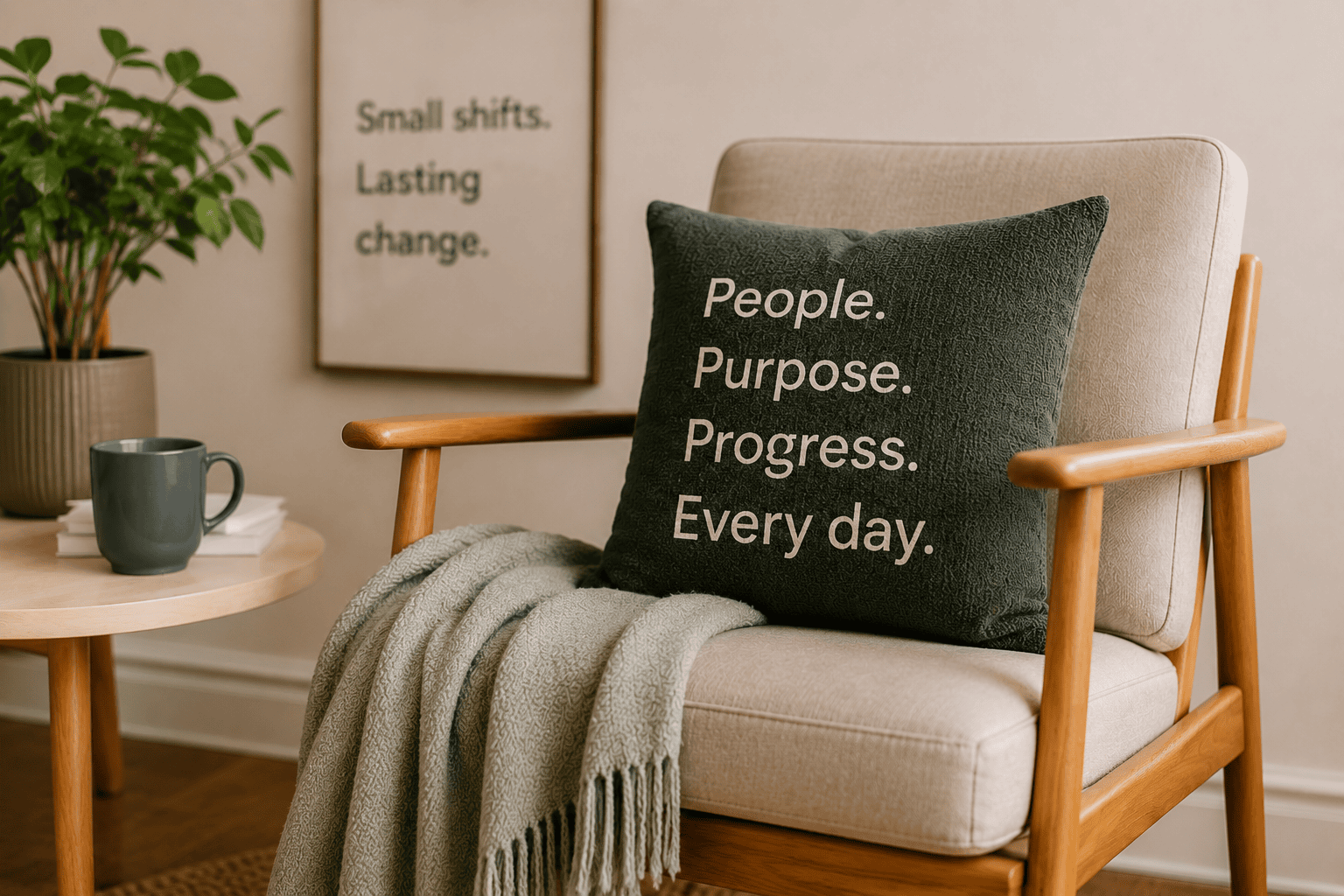
Embracing Sustainable Progress
If Mental Health Awareness Week felt a bit quiet this year, take a breath. It’s okay. You are planting seeds in soil that might need a little more tilling.
Turning a one-off week into a year-round reality isn't about doing more: it’s often about doing better. It’s about shifting from the "hype" of a campaign to the "depth" of a culture that prioritises human needs alongside business performance.
It is about reflections on mental health that lead to practical, systemic changes. It’s about accepting that progress is often slow and non-linear.
If you do not have a strategy yet, that does not mean you are behind. It may simply mean you need a clearer starting point. Often, the most useful first steps are small and honest:
- Listen to employees in a simple, low-pressure way and notice what keeps coming up.
- Map one "unspoken rule" in your culture, such as whether people feel able to switch off, ask for help, or take a proper break.
- Review your current "wellbeing list" and ask whether those offers are connected to a wider plan or just sitting alongside each other.
If you’re ready to move beyond the workshops and start mapping a culture that truly supports your team's nervous systems, we are here to help. We’re offering a free 30-minute strategy audit to help you turn awareness into action and get clearer on what practical, sustainable next steps could look like for your team.
How are you feeling after Mental Health Awareness Week? If you're ready to look at the "what next," book a free 30-minute strategy audit and let’s explore how to build a strategy that sticks.
4 Reflections at the End of Mental Health Awareness Week: Action, Burnout, and the Pressure to Keep Going
4 Reflections at the End of Mental Health Awareness Week: Action, Burnout, and the Pressure to Keep Going

As Mental Health Awareness Week comes to an end, there is often a noticeable shift in how people engage with conversations around wellbeing. At the beginning of the week, awareness campaigns can feel motivating or hopeful, but by the end, they can also bring a deeper level of reflection. This year’s theme of “Action” has placed a strong focus on moving beyond awareness and towards practical support, particularly within workplaces and communities. While this message is important, it can also surface a quieter tension around what meaningful support actually looks like in everyday life, especially when many people already feel emotionally stretched.
For some, the week brings a heightened awareness of their own emotional patterns and capacity. There can be pressure to feel more positive, more resilient, or more in control after engaging with conversations around mental health all week. When this shift does not happen, it can leave people feeling frustrated with themselves, or quietly guilty for not feeling better despite increased awareness and reflection. Instead of relief, there can be a growing awareness of how difficult it has become to properly switch off, recover, or feel emotionally steady in the way they feel they should.
For others, particularly those responsible for supporting teams, the week can highlight the growing emotional strain that exists within workplaces. Burnout and disengagement are becoming harder to ignore, yet there is often uncertainty around how to respond in a way that feels genuine rather than performative. Alongside this, many people continue to carry their own mental strain privately, attempting to hold everything together while recognising that their current pace may not feel sustainable long term. This creates a difficult balance between continuing to function and quietly recognising that something about the way things are currently working no longer feels manageable.

Therapeutic Coaching (10% Off Consultations)
Tired of Pushing Yourself Just to Burn Out Again? Therapeutic coaching helps you slow things down and understand the patterns behind your habits, stress, and self-pressure. It’s about creating change that actually lasts. Find out more.

1. Awareness Does Not Automatically Create Relief
Mental health awareness can create space for important conversations, but awareness itself does not always feel relieving. In some cases, becoming more conscious of stress, burnout, or emotional exhaustion can initially feel uncomfortable because it brings attention to experiences that have been pushed aside or normalised for a long time. Once people begin reflecting more honestly on how they are feeling, it can become harder to ignore the extent of the pressure they have been carrying day to day.
There can also be an unspoken expectation that increased awareness should quickly lead to change. By the end of awareness-focused conversations, people may feel pressure to have clearer boundaries, healthier routines, or a more positive mindset. When this does not happen immediately, it can create another layer of frustration, where people begin questioning why they still feel overwhelmed despite recognising what is wrong. This can leave individuals feeling as though they are somehow failing at recovery, even when they are only just beginning to acknowledge how emotionally tired they have become.
In reality, emotional insight rarely creates instant stability. More often, it simply marks the point where people begin noticing how unsustainable things may have already become. Recognising strain is important, but meaningful change usually develops gradually through repeated adjustments in how people work, rest, communicate, and respond to pressure over time.

2. Burnout Is Becoming Harder to Ignore
One of the clearest themes emerging across workplaces is the growing visibility of emotional exhaustion. Even in environments that appear productive and high functioning, there is often an underlying sense that people are carrying more than they can comfortably sustain. This strain does not always appear dramatically. More often, it shows up gradually through emotional flatness, reduced patience, difficulty concentrating, or a sense of detachment that becomes harder to hide over time.
For leaders and managers, this awareness can feel particularly heavy. There is often a genuine desire to create supportive environments, while also recognising that wellbeing initiatives can quickly feel superficial if the wider culture remains unchanged. This can leave people feeling responsible for supporting the emotional wellbeing of others while quietly struggling with their own capacity in the background. In some cases, leaders themselves are functioning under significant pressure, while still feeling expected to remain calm, available, and emotionally steady for everyone else around them.
What makes burnout difficult is that it rarely comes from one isolated issue. It tends to develop through the accumulation of pressure over time, especially in environments where recovery never fully catches up with demand. Because of this, meaningful action often requires more than encouraging resilience. It involves recognising when the pace people are expected to maintain has stopped feeling sustainable, and being willing to reflect honestly on what may need to change within the wider environment itself.

3. Many People Continue to Carry Their Strain Quietly
Not everyone experiencing mental strain will speak openly about it. In many cases, people continue functioning outwardly while privately feeling depleted, emotionally reactive, or mentally exhausted. There can be a strong pressure to remain dependable and composed, particularly in professional or caregiving roles where others rely on them for stability. For individuals who are used to managing responsibility, it can feel easier to continue coping quietly than to acknowledge that things no longer feel manageable in the same way.
Because this strain is often internalised, it may only become visible in subtle ways. Someone may appear quieter than usual, less patient under pressure, or increasingly withdrawn without directly identifying that they are struggling. These shifts are easy to miss when environments are fast paced or highly performance-focused, particularly when outward performance remains relatively consistent. This can create situations where people are carrying a significant level of emotional strain without receiving support, simply because they are still continuing to function.
There can also be a point where people become so used to functioning under strain that they stop recognising it as something that should be addressed. Coping becomes the priority, even when that coping feels increasingly fragile. Over time, this can create a version of normal that revolves around exhaustion, emotional suppression, and constant recovery rather than genuine wellbeing. This is often why conversations around sustainability matter so much, particularly for people who are used to carrying responsibility without drawing attention to themselves.

4. Action Often Looks Smaller Than People Expect
The theme of “Action” can sometimes create the impression that meaningful mental health support needs to involve large or highly visible change. In reality, the actions that tend to have the greatest impact are often much quieter than people expect. They are usually reflected in the everyday culture of an environment, rather than in one-off gestures or awareness campaigns that disappear once the week is over.
Supportive environments are rarely created through isolated initiatives alone. More often, they are shaped through the smaller decisions that influence how people experience work day after day. This might be reflected in how pressure is managed, how realistically expectations are set, or whether people feel safe enough to acknowledge when their capacity has changed. These moments may seem small individually, but over time they influence whether people feel consistently supported or simply expected to continue coping silently.
These shifts can seem subtle, but they often determine whether wellbeing support feels genuine or symbolic. By the end of Mental Health Awareness Week, the most important question may not be how much awareness was raised, but whether anything feels different once the conversations become quieter again. Sustainable action is usually less about dramatic change and more about creating environments where people no longer feel they have to carry everything alone.

What Happens After Awareness Matters Most
Mental Health Awareness Week often encourages important conversations, but its value is not only in the awareness created during the week itself. What matters more is what continues afterwards, particularly once people return to the realities of work, responsibility, and emotional strain. This is often where the gap between awareness and action becomes most visible.

Earth Day 2026: 4 Ways to Create Meaningful Change Without the Overwhelm
Earth Day 2026: 4 Ways to Create Meaningful Change Without the Overwhelm

Earth Day comes around every year, but how it feels can shift depending on where we are in our lives.
For some, it brings a quiet sense of guilt, a reminder of the habits we haven’t quite changed yet. For others, it sparks motivation, a genuine desire to do better, to make more conscious choices, and to leave something meaningful behind. And for many of us, particularly those balancing work, leadership, and everyday responsibilities, it raises a more complex question: how do we contribute to something bigger when we already feel stretched?
Caring about the environment doesn’t always feel empowering. Sometimes, it feels like pressure.
Eco-anxiety can show up in subtle but persistent ways - questioning whether you’re doing enough, noticing the gap between your intentions and your actions, or feeling overwhelmed by the scale of the problem. It’s easy to slip into an all-or-nothing mindset, where anything less than “fully sustainable” feels like failure. But this is often where people get stuck.
The reality is that sustainability was never meant to be carried by individuals striving for perfection. It is built through collective, imperfect action over time. When we shift our mindset from “I have to get everything right” to “I can take one step forward”, the pressure begins to ease, and progress becomes more sustainable in itself.
This is where Earth Day becomes more than just a date on the calendar. It becomes a moment to pause, reflect, and reconnect with what actually feels possible, not perfect.

Therapeutic Coaching (10% Off Consultations)
Tired of Pushing Yourself Just to Burn Out Again? Therapeutic coaching helps you slow things down and understand the patterns behind your habits, stress, and self-pressure. It’s about creating change that actually lasts. Find out more.

1. The Power of Small, Consistent Choices
It’s easy to underestimate the value of everyday decisions, especially when they seem small compared to global challenges. However, our daily habits shape not only our personal impact but also the culture around us.
Small changes repeated consistently create momentum. They influence how we think, how we behave, and how we show up in conversations with others. Over time, these shifts begin to ripple outward.
This doesn’t mean overhauling your entire lifestyle overnight. In fact, trying to do too much at once often leads to burnout or disengagement. A more realistic and effective approach is to focus on manageable, meaningful changes that you can sustain.
For example:
- Reducing waste in one area of your daily routine
- Being more intentional about what and how you consume
- Starting conversations with family, colleagues, or teams about shared responsibility
These actions may seem small in isolation, but collectively, they contribute to something much larger a gradual shift in awareness, behaviour, and expectation.

2. Leadership and Culture
For those in leadership roles, the conversation around sustainability often feels more complex.
It’s not just about personal choices, it’s about organisational responsibility, team engagement, and balancing environmental goals with operational realities. Time, budget, and competing priorities can make meaningful change feel out of reach, even when the intention is strong. However, meaningful change in organisations rarely comes from large, immediate transformations. More often, it begins with clarity, honesty, and small, strategic steps.
Leaders have a unique opportunity to shape culture, not by having all the answers, but by opening the conversation. Being transparent about where you are as an organisation, what’s working, what isn’t, and what you’re aiming to improve builds trust and encourages participation.
When people feel included in the process, they are far more likely to engage with it. Over time, this shared ownership becomes the foundation for more sustainable, long-term change.

3. From Awareness to Action
By the time we pause and reflect on Earth Day, the question often isn’t whether we care, but what we can realistically do next. When everything feels urgent and important, it’s easy to become stuck between intention and action, unsure where to begin or how to make a difference that actually lasts.
One of the most helpful shifts is recognising that change doesn’t need to start from an ideal; it simply needs to start from somewhere real. When we focus on what is already within our control, rather than what feels out of reach, progress becomes far more accessible. That might look like adjusting a small part of your daily routine, or, in a leadership context, opening up a simple, honest conversation about sustainability within your team. Starting where you are removes the pressure to do everything at once and replaces it with a sense of direction.
At the same time, it’s important to let go of the idea that we need to get it right from the outset. Sustainability is not a fixed destination; it is something we learn, adapt, and grow into over time. When we allow ourselves to be open about that process, acknowledging what we are trying, what we are still figuring out, and where the challenges lie, it creates space for more genuine engagement. This is especially true within organisations, where a culture of openness can often lead to far more meaningful participation than a polished but distant approach.

4. Thinking About Legacy
At its core, sustainability is not just about the environment; it’s about the kind of impact we leave behind. This isn’t limited to large-scale initiatives or visible outcomes. It lives in the quieter, everyday moments: the habits we model, the conversations we start, and the values we embed in the people and environments around us. When we think about legacy in this way, it becomes less overwhelming and more personal. It shifts from a question of “Can I fix this?” to “What part can I play?”
And that is where meaningful change begins. What often gets overlooked in conversations about legacy is that it isn’t only shaped by big decisions or long-term strategies. It is built quietly, through consistency in the way we show up, the choices we repeat, and the standards we are willing to hold over time. When we begin to see sustainability as part of our everyday influence, rather than something separate or additional, it becomes far more integrated and meaningful. In this way, legacy stops being something distant and instead becomes something we are actively shaping, one decision at a time.
Meaningful legacy isn’t measured only in achievements or memories, but in the condition of the world we pass on: cleaner air, thriving ecosystems, and sustainable systems that support future generations. It’s about recognising that small, consistent choices, reducing waste, protecting natural spaces, supporting responsible innovation, accumulate into long-term impact. In that sense, Earth Day reframes legacy as a shared responsibility, where the goal isn’t just to be remembered, but to ensure that the Earth itself remains a place where life can flourish long after we’re gone.
A Lasting Perspective
If you care even slightly, you are already part of the solution. Earth Day doesn’t require you to do everything. It simply invites you to do something in a way that feels realistic and sustainable for you. Because change doesn’t come from perfection, it comes from people showing up consistently in ways that matter. In the end, thinking about legacy through the lens of Earth Day brings us back to something simple but powerful: the idea that our presence here matters in quiet, lasting ways. The choices we make often small and unremarkable on their own ripple outward over time, shaping the world others will inherit.
And that is more than enough to begin. Perhaps that’s the most reassuring part of all. There is no single moment where everything changes, no point at which you suddenly “arrive” at doing it perfectly. Instead, it’s a series of small, intentional actions that gradually build into something bigger. When we take the pressure off needing to do everything and focus instead on doing what we can, we create space for progress that is not only achievable but sustainable in the truest sense of the word.
If this has resonated, you might be sitting with a sense of wanting to do more to live more intentionally, to contribute in a way that feels meaningful, or to feel more aligned with the kind of impact you want to have.
And yet, at the same time, not quite knowing what that looks like in real life.
That space in between awareness and action is where many people get stuck. Not because they don’t care, but because everything can feel a bit overwhelming, unclear, or just hard to translate into everyday life.
At Inspire You, we support individuals through coaching and wellbeing work that helps bridge that gap. Not by adding more to your plate, but by helping you find a way forward that feels realistic, grounded, and true to you.
If you’re ready to explore that in your own way, book in for a free discovery call.

How to Support Your Autistic Child When They Don’t Meet the Therapy Threshold (5 Practical Strategies That Work)
How to Support Your Autistic Child When They Don’t Meet the Therapy Threshold (5 Practical Strategies That Work)

It can feel incredibly frustrating when you know your child is struggling, but you’re told they don’t meet the threshold for support. Many parents find themselves in this in-between space, aware that something isn’t quite right, but without access to services like CAMHS or formal therapeutic input. If this is you, you’re not alone.
And importantly, your child does not need a diagnosis to deserve the right environment to thrive. Systems are designed around thresholds, but children don’t develop in neat categories; their needs exist within the context of their environment, relationships, and daily experiences.
This is where learning to support your autistic child at home can make a meaningful difference.

Low Cost Wellbeing Sessions for Children
We offer low-cost wellbeing sessions for children and young people, designed for those who may be experiencing anxiety, overwhelm, emotional challenges or low-level difficulties that still have a real impact day-to-day - without long waits or formal referral processes.
We also work alongside parents, so you feel more confident supporting your child at home too.

5 Practical Strategies to Support your Autistic Child at Home
1. Create Predictability Wherever You Can
For many children with autistic traits, the world can feel unpredictable and overwhelming. Not knowing what is happening next can increase anxiety and lead to emotional overwhelm, particularly during transitions like getting ready for school, leaving the house, or moving between activities.
Creating predictability doesn’t mean having a rigid or overly structured home. It means building in small, consistent patterns that help your child feel safe and prepared. This might look like having a similar flow to your mornings, using visual cues or simple explanations about what is happening next, or preparing your child in advance for changes in routine.
Even something as simple as saying, “After dinner, we’ll have a bath and then a story before bed,” can help reduce uncertainty.
Predictability supports a child’s sense of safety. When a child feels safe, they are more able to regulate their emotions and cope with everyday demands. Without that sense of safety, even small tasks can feel overwhelming.

2. Adapt The Sensory Environment, Not Just The Behaviour
What can sometimes look like “challenging behaviour” is often a response to sensory overload. Many children experience heightened sensitivity to things like noise, light, textures, or busy environments. A classroom, supermarket, or even a busy family home can quickly become overwhelming, leading to distress, shutdown, or what might be described as a meltdown.
Instead of focusing only on the behaviour, it can be helpful to ask: What might my child be experiencing in this environment?
Practical adjustments might include:
- Reducing background noise where possible
- Creating a calm, low-stimulation space at home
- Being mindful of clothing textures or labels
- Allowing downtime after school to decompress
Rather than expecting the child to constantly adapt to the environment, we adapt the environment to better meet the child’s needs. Often, when the environment becomes more manageable, the behaviour changes naturally.

3. Lower Demands During Moments Of Overwhelm
When a child is overwhelmed or dysregulated, their brain is not in a place where it can process instructions, reasoning, or consequences effectively. In these moments, increased demands such as asking lots of questions, giving instructions, or trying to “talk things through” can actually escalate the situation.
Instead, it can help to shift into a low-demand, supportive approach. This might involve: Using fewer words and a calm tone or sitting alongside your child rather than directing them
This approach is grounded in relational and trauma-informed practice. It recognises that behaviour is often a communication of distress, not defiance. When we respond with calm and connection rather than control, we help the child return to a regulated state more quickly and over time, this supports their ability to manage emotions more independently.

Understanding The “In-Between” Space
From an ecological perspective, a child’s behaviour is not just about what is happening within them; it is shaped by everything around them. Home routines, school expectations, sensory environments, and relationships all play a role.
When support is only offered once a child reaches a crisis point, many children who are quietly struggling are unintentionally overlooked. This can leave parents feeling dismissed, and children feeling misunderstood.
But needs are still needed even if they are not yet recognised within a formal system. You might see big emotional reactions that seem to come “out of nowhere” or masking at school, followed by overwhelm at home. These are often described as “autistic traits,” but regardless of labels, they are signals that your child may be feeling overwhelmed or dysregulated.

4. Focus On Emotional Regulation, Not Just Behaviour
It’s easy to feel pulled into managing behaviour, especially when it is disruptive, intense, or difficult to understand. But behaviour is often the surface, not the cause. Children who struggle with regulation may not yet have the skills to identify, express, or manage their emotions. What looks like anger, avoidance, or refusal is often linked to overwhelm, anxiety, or frustration.
Supporting emotional regulation means helping your child understand and move through those feelings, rather than simply trying to stop the behaviour. Naming emotions in a simple, non-judgemental way, “That felt really overwhelming, didn’t it?” paired with modelling calm responses, is a great start to help teach emotional regulation.
Over time, this builds emotional literacy and resilience. This is about co-regulation, where the adult supports the child’s nervous system until they can do this more independently.

5. Adjust Expectations With Compassion And Flexibility
One of the most important and often most difficult shifts is adjusting expectations. Children with autistic traits may process information differently, respond more slowly to transitions, or find certain social or sensory demands much more challenging than their peers.
Holding them to the same expectations without adjustment can lead to repeated feelings of failure, frustration, and low self-esteem. This doesn’t mean lowering expectations altogether it means making them more realistic and attuned to your child’s needs. Can you allow extra time for transitions or let go of comparisons to other children?
This is about recognising that one-size-fits-all approaches do not work for every child. When expectations are adjusted with understanding, children are far more likely to feel capable, supported, and secure.

Why This Support Matters
Early, consistent support at home can have a significant impact over time. It can reduce escalation, strengthen your relationship with your child, and help them feel understood rather than “difficult” or “different.”
Importantly, recognising that your child does not need to be “fixed,” but supported in a way that works for them. But your concerns are valid, and the support you put in place now at home, in everyday moments, can make a real and lasting difference.
It can feel like everything is on hold while you wait for answers, referrals, or support that may not come straight away. But meaningful support doesn’t have to start with a diagnosis. It can start with small, thoughtful changes, a shift in understanding, and the right kind of guidance.
If you’re navigating this space, it can feel isolating especially when you’re being told your child doesn’t meet the criteria for support.
If you’d like support with understanding your child’s needs or putting practical strategies in place, this is something we offer through our low-cost wellbeing sessions for children supporting families early, before things reach crisis point.
Low Cost Wellbeing Sessions for Children
We offer low-cost wellbeing sessions for children and young people, designed for those who may be experiencing anxiety, overwhelm, emotional challenges or low-level difficulties that still have a real impact day-to-day - without long waits or formal referral processes.
We also work alongside parents, so you feel more confident supporting your child at home too.

Poor Sleep affecting your performance at Work? 5 Practical Ways to Fix It
Poor Sleep Affecting Your Performance At Work? 5 Practical Ways To Fix It

Sleep awareness week is a reminder that sleep is not a luxury; it’s essential. Sometimes the week feels like more of a battle than usual, when you're running on little energy and just trying to get through it and make it to the weekend. We feel like we are surviving not thriving.
Over time, poor sleep at work affects more than energy levels. It impacts every part of our day especially the start when that early alarm disrupts the little amount of precious sleep we get. We wake up, knowing we've had poor sleep, asking ourselves how am I going to get through today?
This sleep awareness week, it’s worth asking: What is poor sleep costing you and your workplace? And what changes can I make to improve this?
You may feel stuck in inconsistent routines or in a position of leadership and notice fatigue across your team. Here are 5 small practical changes that can make a real difference.

Free 15-Minute Sleep Audit
Do you feel like poor sleep has just become your normal? Many people assume that struggling with sleep is simply something they have to live with. But poor sleep is not something you have to accept.
During this session we will explore what may currently be disrupting your sleep and practical strategies you can begin implementing immediately.
Cognitive Behavioural Therapy for Insomnia (CBT-i) is considered the gold standard treatment for sleep difficulties.

Free 30-Minute Workplace Sleep Audit
Is fatigue affecting focus, productivity or wellbeing within your team? Book a Workplace Sleep Audit with a CBT-i trained sleep therapist.
This short consultation is designed for business leaders and owners who are noticing signs of low energy or burnout within their team and want to understand what may be contributing to it.
Sleep problems are extremely common, but people don’t have to accept poor sleep as the norm. CBT-i is the gold standard treatment for insomnia and typically produces meaningful improvements within around eight weeks.

Why Poor Sleep at Work Deserves Attention
Poor sleep is seen as a personal issue, something to fix at home; however, the effects rarely stay there. When sleep is consistently disrupted, it directly affects our thoughts and ability to maintain a clear state of mind to complete tasks to the best of our ability.
Over time, repeated poor sleep doesn’t just create tired individuals; it contributes to workplace tension and the potential risk of burnout.
Sleep awareness week exists to bring this conversation into the open, acknowledging that sleep is a workplace wellbeing issue, not just a lifestyle choice. We create space for healthier boundaries, with leaders acknowledging staff as humans, not robots.

1. Rebuild a Consistent Wind-Down Routine
Sleep thrives on predictability; when bedtimes vary wildly or evenings are filled with stimulation, the brain struggles to switch off. Therefore, a routine that involves dim lighting, a consistent bedtime window, less scrolling and more reading or stretching is a good start at getting your bedtime routine back on track.
A consistent wind-down routine signals safety to your nervous system, a psychological bridge between work mode and rest mode. Without that transition, many people go straight from emails to bed and expect sleep to happen instantly.
The goal is not perfect sleep; it’s consistency, and because of these healthy habits, sleep confidence is built. Even if you don’t fall asleep immediately, your body begins to recognise the pattern.
Over time, this reduces bedtime anxiety and shortens the “wired but tired” feeling that so many experience.
2. Strengthen Work–Rest Boundaries
Sleep is often disrupted long before we get into bed, when work continues into the evening through emails or simply thinking about tomorrow, the brain stays switched on. You might feel physically exhausted but mentally alert, replaying conversations and overanalysing every part of your day.
Clear boundaries help create a psychological full stop at the end of the day. This can be tough and requires strong boundaries with yourself, which could include choosing a realistic time to close your laptop or resisting the urge to “just check one more email.” Try writing down tomorrow’s priorities so they are stored somewhere other than your head.
Without that separation, many people move straight from problem-solving into bed and expect their minds to instantly slow down. It rarely works that way.
Boundaries are less about discipline and more about reassurance. When your brain trusts that work has paused, it becomes much easier for your body to settle. Over time, that separation makes falling asleep feel less like a battle and more like a natural shift.

3. Spot the Early Signs of Fatigue
Fatigue doesn’t usually announce itself clearly; it tends to disguise itself as something else, and this can be hard to catch before it's too late.
You might notice you’re snapping more easily, struggling to concentrate in meetings or feeling unusually self-critical. Tasks that normally feel manageable start to feel heavier, and your ability to tolerate others fades away, making you more snappy, and those small mistakes start to creep in. You can become your own worst enemy, being extremely self-critical and assume you need to try harder, when in reality, you may simply need to rest.
When tiredness is ignored, it builds, and the longer it builds, the harder it becomes to recognise. Sleep awareness week offers a chance to pause and look at patterns rather than moments. This week can have you reflecting, asking yourself Has your patience shortened recently? Has your motivation dipped? Are you relying on caffeine just to feel steady?
Recognising fatigue early changes the response, and instead of pushing through, you can adjust, and that adjustment often prevents a deeper slide into burnout.

4. Support Energy During the Day
We often focus on bedtime habits, but sleep is shaped throughout the day. Spending the entire day under pressure and indoors with no fresh air or natural sunlight, it becomes harder for the body to transition into rest later on.
Getting outside in the morning light, even briefly, helps anchor your body clock. Paired with moving between meetings instead of staying seated all day, releases built-up tension, and taking a proper break at lunch creates a mental reset rather than a continuation of output. Therefore, when the nervous system has space to settle during the day, it doesn’t need to fight so hard at night.
Having back-to-back high-focus tasks without pause may feel productive in the moment, but they often lead to a tired yet fully active mind later on. This emphasises the need to support energy earlier, which makes sleep feel more accessible rather than forced.
5. Make Sleep Part of Workplace Wellbeing
Sleep is rarely discussed openly at work, yet almost everyone feels its effects. Tiredness has become normalised, and some think being overworked and in a constant state of fatigue is a good sign that they are working hard; they assume it’s just part of being busy or ambitious.
Bringing sleep into workplace conversations shifts the narrative from being seen as weak or incapable, allowing people to acknowledge when they’re running low. Leaders have particular influence here; when someone senior talks openly about protecting their own rest or setting evening boundaries, it permits others to do the same.
Treating sleep as part of wellbeing isn’t about lowering standards; it’s about recognising that sustained performance requires sustained energy. When that understanding becomes shared, people feel less pressure to prove themselves through exhaustion.

A Small Shift Can Change More Than You Think
Sleep awareness week isn’t about striving for perfect sleep or adding another pressure to your routine; it’s an invitation to notice. Notice how you feel at the end of the day, notice how your mood shifts after a poor night’s sleep and notice how your team shows up when energy is low.
Poor sleep at work is rarely just about tiredness; it affects how we speak to each other and how clearly we think, leading to a lack of confidence in our decisions.
The encouraging part is that change doesn’t have to be dramatic and narrowing focus on the evening routine and making sure you are setting boundaries for it to work. Sleep is not a luxury reserved for when things calm down; it is the foundation that allows work and people to function well in the first place.
If this sleep awareness week has prompted reflection, it may also be a starting point for wider conversations about sustainable performance and workplace wellbeing.
At Inspire You, we support organisations to build healthier, more resilient workplace cultures, from leadership development to team wellbeing strategy. Our work focuses on creating environments where people can thrive. Find out more about how we can support your organisation here.
Free 30-Minute Workplace Sleep Audit
Is fatigue affecting focus, productivity or wellbeing within your team? Book a Workplace Sleep Audit with a CBT-i trained sleep therapist.
This short consultation is designed for business leaders and owners who are noticing signs of low energy or burnout within their team and want to understand what may be contributing to it.
Sleep problems are extremely common, but people don’t have to accept poor sleep as the norm. CBT-i is the gold standard treatment for insomnia and typically produces meaningful improvements within around eight weeks.
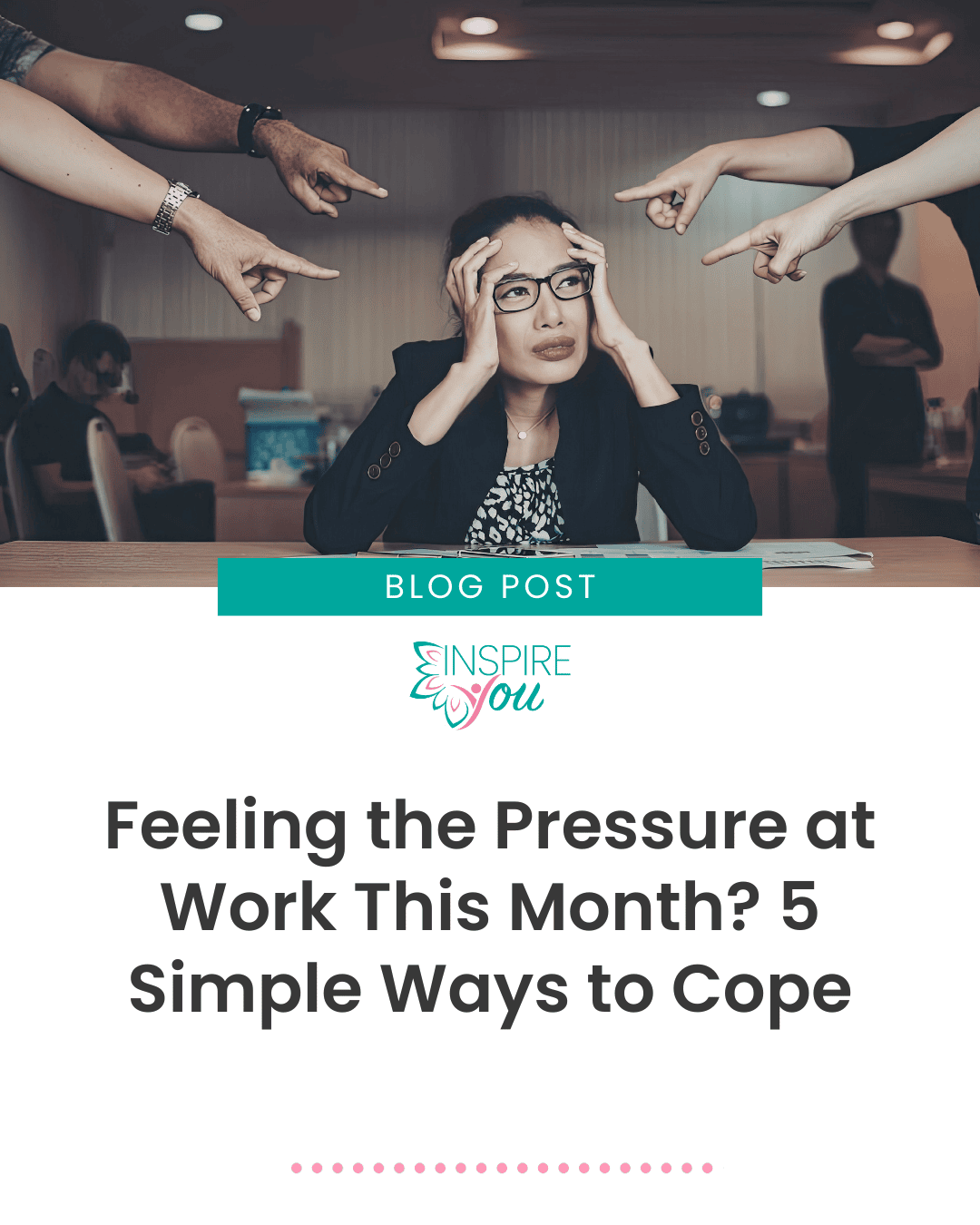
Feeling the Pressure at Work This Month? 5 Simple Ways to Cope
Feeling the Pressure at Work This Month? 5 Simple Ways to Cope

When Work Starts to Feel Heavier Than Usual
Some months feel different. When deadlines are tightening and expectations rise, you might notice your patience thinning or your energy dipping faster than usual. Pressure at work can gradually make you physically and mentally sick when there is little or no self-care to balance it.
When stress hormones like cortisol remain elevated for too long, they create many health risks, such as a weakened immune system and or increased blood pressure. When there is pressure at work, not only does it affect your performance, but it also impacts your nervous system, and if financial strain or personal stress is layered on top, everything can feel amplified.
If this month feels heavier, you’re not alone. The key isn’t pushing harder. It’s getting a better understanding of how to respond differently.
Here is how to to cope with pressure at work.

Therapeutic Coaching (10% Off Consultations)
Tired of Pushing Yourself Just to Burn Out Again? Therapeutic coaching helps you slow things down and understand the patterns behind your habits, stress, and self-pressure. It’s about creating change that actually lasts. Find out more.

1. Focus on the Next Controllable Step
When there is pressure at work, your mind can jump to outcomes, creating stress and workplace anxiety over things that haven't even happened yet. You may find yourself asking, “What if I don’t hit the target?” or “What if I fall behind?” Anticipatory workplace anxiety can leave you in a constant state of worry over outcomes that more than likely won't happen, especially if youve done the work you need to do.
That future-focused thinking increases anxiety and drains energy. Instead, break the thought down into achievable steps to reach that long-term goal and narrow your focus. Ask yourself this instead: "What is the very next step I can take?" or "What does progress look like today, not by the end of the month?"
Then complete that step, as small steps combined lead to long-term change. The big goals can create stress; it can be overwhelming trying to figure out the first step to achieve those far away, almost unrealistic targets. Starting those small actions creates momentum, and momentum restores a sense of control.
If overwhelming pressure at work is becoming a pattern rather than a phase, our workplace wellbeing sessions help employees develop realistic, sustainable strategies for managing stress and maintaining performance.
Get in touch to explore how we can support your team.
2. Understanding Yourself To Help With Workplace Anxiety
Anxiety, and in particular workplace anxiety, can stem from your inner conflict, how you may see yourself could be different to how others see you in the workplace. You may view yourself as someone who is confident and capable, but feel you're constantly criticised and not able to meet expectations. These roles could also be swapped, and your own low self-esteem may stop you from believing how capable you actually are.
These mismatches can create tension, and finding a more positive alignment within yourself and others' expectations means increasing your own self-awareness of what you are capable of and setting boundaries of what others should expect.
By approaching workplace anxiety with curiosity rather than judgment, you can gain insight into your boundaries. Over time, this self-understanding allows you to make more intentional choices that align with your authentic self and support your overall wellbeing.
Team Coaching
Our team coaching sessions help teams communicate better, work smarter, and perform more effectively. Through DISC profiling, we gain insight into each individual’s behavioural style and team dynamics. This means coaching is personalised, practical, and directly relevant to your workplace - supporting both performance and wellbeing. Book a FREE discovery call to find out how we can help.


3. Acknowledge That This Is a High-Pressure Period
Many people cope by pretending they’re fine; the effects this can have on you physically and mentally can be extremely harmful. Ignoring pressure doesn’t remove it; it just forces your body to carry it silently, and the longer this goes on, the greater the chance of a mental or physical injury.
Try acknowledging it instead, understanding that it is okay for times to be tough; we're all human. Do this by naming the pressure, which reduces that internal resistance and allows you to accept this period as a hard time, and, as a result of that internal barrier being removed, you could even ask for help.
You don’t need to eliminate workplace stress; you need to stop fighting yourself for feeling it, and having the ability to self-acknowledge builds resilience far more effectively than self-criticism ever will.

Therapeutic Coaching (10% Off Consultations)
Tired of Pushing Yourself Just to Burn Out Again? Therapeutic coaching helps you slow things down and understand the patterns behind your habits, stress, and self-pressure. It’s about creating change that actually lasts. Find out more.

4. Creating The Right Enviroment For The Best Results
People have a natural drive toward growth and self-actualisation, meaning they move toward becoming their best and most authentic selves; however, this can only be done when given the right conditions. In the workplace, anxiety can increase when those conditions are missing, creating a safe space allows people to express themselves without judgment or fear of doing something wrong.
If someone only feels appreciated for performance rather than who they are as a person, they may begin to doubt themselves and disconnect from their natural strengths. Therefore, reducing work anxiety involves creating environments that foster genuine support, allowing individuals to grow with confidence rather than fear.

5. Protect One Small Daily Reset
When work feels intense, self-care is usually the first thing to disappear. But this is when you need it most, and instead of trying to overhaul your routine, choose one small, non-negotiable reset every day.
For example:
-
Take a 10-minute walk without your phone.
-
Eat lunch away from your desk twice this week.
-
Leave on time one evening.
-
Write down three completed tasks before shutting your laptop.
Consistency matters in terms of performance at work, but the only way that is going to stay the same is by consistent self-care. So when pressure feels unpredictable, routine creates stability.
That one small ritual sends a powerful message to your nervous system, and that shift protects your energy more than you realise.

Be Kind To Yourself
If you’re feeling the pressure at work this month, it doesn’t mean you’re falling behind. You may just have incredibly high standards and expectations that can be hard to reach. That's okay, but remember, if the expectations are high and the demands are heavy, you’re only human. By approaching workplace worries with curiosity rather than judgment, you can gain insight into your boundaries and what could be the cause of the pressures you face at work. Over time, this self-understanding allows you to make more intentional choices that align with your authentic self and support your overall wellbeing.
If you are struggling, we offer therapeutic coaching to help address both emotional wellbeing issues, as well as lifestyle, relationships and career. Book a free discovery call here.
You don’t need a dramatic change; just make one controllable action that you stick to.
If your team is navigating sustained pressure like this, structured wellbeing sessions can provide practical tools and shared language to manage it more effectively. Book in a free discovery call or email claire@inspireyouwellbeing.co.uk to find out how we can help.
Team Coaching
Our team coaching sessions help teams communicate better, work smarter, and perform more effectively. Through DISC profiling, we gain insight into each individual’s behavioural style and team dynamics. This means coaching is personalised, practical, and directly relevant to your workplace - supporting both performance and wellbeing. Book a FREE discovery call to find out how we can help.

Random Acts of Kindness Week: How 6 Small Gestures Build a Positive Workplace Culture
Random Acts of Kindness Week: How 6 Small Gestures Build a Positive Workplace Culture

Random acts of kindness week isn’t about grand gestures. It’s not about performative positivity, or overly cheerful slogans pasted across office walls. It’s about the genuine ones. The small choices that often go unnoticed.
In busy workplaces, kindness can feel like a luxury. We’re moving fast, and deadlines loom. In all of that motion, it becomes surprisingly easy to rush past opportunities to slow down and see each other.
It’s often the smallest gestures that stay with us. If you’re looking for guidance on making these small, meaningful changes stick, our coaching services help leaders and teams implement strategies that foster authentic connection.
Why Workplace Kindness Matters More than Ever
Many of us are generous with others. We’ll stay late to help. We’ll check in on a colleague. We’ll offer encouragement without hesitation.
And yet, receiving kindness can feel uncomfortable. We deflect compliments and downplay praise, telling ourselves we “just did our job.”
Why is it easier to give praise than to receive it?
Work cultures often reward output over openness. We become skilled at performing competence, but less comfortable accepting appreciation. Random acts of kindness week offers a gentle reminder that kindness isn’t just something we distribute. It’s something we allow.

The Problem With Forced Positivity
There’s a difference between kindness and compulsory cheerfulness.
Kindness is intentional and authentic; there is no time or place for forced positivity, which is exhausting, and people see straight through it. People can sense the difference.
Kindness doesn’t require constant smiles or ignoring challenges. In fact, it often looks like honesty:
-
“That was a tough week. I appreciate how you handled it.”
-
“I know this project stretched you. Thank you.”
-
“I don’t say it enough, but your work makes a difference.”
Genuine kindness respects reality. It doesn’t gloss over stress or difficulty. It meets people where they are.

The Cost of Rushing Past Appreciation
In busy organisations, appreciation becomes a “nice to have.” We assume people know they’re valued, and there will always be other opportunities, or something bigger to show gratitude.
But unspoken appreciation doesn’t build culture. A meaningful workplace is shaped through micro-moments:
-
Acknowledging effort publicly
-
Giving specific feedback
-
Taking 60 seconds to send a thank you message
-
Pausing to truly listen
These small gestures are the foundation of meaningful work relationships.
And they are often the difference between a team that functions and a team that thrives.
Team Coaching
Our team coaching sessions help teams communicate better, work smarter, and perform more effectively. Through DISC profiling, we gain insight into each individual’s behavioural style and team dynamics. This means coaching is personalised, practical, and directly relevant to your workplace - supporting both performance and wellbeing. Book a FREE discovery call to find out how we can help.

6 Simple Random Acts of Kindness Ideas for the Workplace
If you’re wondering how to celebrate random acts of kindness week at work in a genuine way, start small:
-
Send one personalised message of appreciation today
-
Recognise effort, not just results
-
Offer specific positive feedback
-
Ask a colleague how they’re really doing and listen
-
Share credit publicly
-
Extend the same compassion to yourself
These small workplace kindness ideas create ripple effects that extend far beyond one day.

Making Kindness Part of your Workplace Culture
Random Acts of Kindness Day is a reminder, not a one-off campaign.
To build a truly positive workplace culture, kindness needs to show up in:
-
Leadership communication
-
Feedback conversations
-
Performance reviews
-
Team meetings
-
Responses to mistakes
-
Daily interactions
Because kindness at work isn’t soft. It’s strategic. It can help with retention, making people feel valued, leading to a trusting, safe space to work.
And most importantly, it makes work feel human.

Final Thought: Small Gestures, Lasting Impact
The most powerful acts of workplace kindness are rarely dramatic.
In a world that rewards speed and output, choosing to pause and appreciate someone may be the most impactful leadership decision you make all week.
This Random Acts of Kindness week, don’t focus on doing more. Focus on noticing more. Saying more and seeing people for who they are, not what they can do for you.
If you would like support in improving your people culture, our services for organisations can help. We use DISC profiling to understand each of your staff, and the dynamics between each other - and use this information to construct personalised group coaching sessions. Find out more here or book a discovery call to see how we can help.
Team Coaching
Our team coaching sessions help teams communicate better, work smarter, and perform more effectively. Through DISC profiling, we gain insight into each individual’s behavioural style and team dynamics. This means coaching is personalised, practical, and directly relevant to your workplace - supporting both performance and wellbeing. Book a FREE discovery call to find out how we can help.

Good Enough Parenting: 3 Ways to Support your Child’s Emotional Wellbeing Without Being Perfect
Good Enough Parenting: 3 Ways to Support your Child’s Emotional Wellbeing Without Being Perfect
Children’s Mental Health Week can stir up a lot for parents. It can bring pride, love, and deep care, but also quiet questions that creep in during the busy, messy moments of everyday life:
- Am I doing enough?
- Have I been patient enough?
- Did I handle that well?
If you’ve felt more emotional or reflective than usual about your child lately, you’re not alone.
CHILDRENS THERAPY
Our children’s therapy services support children around the Shoreham-by-sea area who struggle with emotional regulation, big feelings, shutdowns, anxiety, or behaviour that feels hard to understand.
What is “good enough” parenting?
The paediatrician and psychoanalyst Donald Winnicott introduced the idea of the “good enough” parent. Not the perfect parent. Not the endlessly patient, never snappy, always available parent. But a parent who is human and emotionally present enough for their child to feel safe and secure.
Winnicott believed that children don’t benefit from perfection. In fact, small, manageable frustrations, not always getting what they want, and learning that others have needs too, help children build resilience, independence, and emotional strength.
Being “good enough” means:
- Showing up most of the time
- Repairing things when they go wrong
- Letting children experience life’s bumps while knowing they are loved
But real life is more complicated than theory.

When life feels like too much
What happens when the frustrations children face aren’t just small, manageable ones?
What about when parents are exhausted, stretched, or overwhelmed themselves?
Children don’t just need limits and learning experiences; they also need unconditional positive regard. They need to feel that even when their behaviour is loud, withdrawn, or challenging, the relationship underneath is safe.
That’s hard to offer consistently when you’ve:
- Had a draining day at work
- Snapped at someone you didn’t mean to
- Been running on too little sleep
- Walked home in the rain
There is no guidebook for parenting in those moments. No script for how to stay calm when you feel anything but. And yet, those are often the exact moments children need us to help them make sense of their big feelings.

1. Model imperfection and repair
One of the most powerful things a parent can say is:
“I got that wrong, I’m sorry.”
When you lose patience or misread a situation, repairing the moment teaches children that relationships can bend without breaking. It shows them that mistakes don’t mean disconnection. That’s a core part of “good enough” parenting.

“Being there” changes as children grow
When children are small, being present can feel more straightforward. You’re physically there to comfort, distract, and soothe. As they get older, things shift.
They spend more time alone. Their social world gets bigger. Pressures increase, including friendships, school expectations, and the online world. They are left to regulate themselves without you right beside them.
That can be scary for parents. You can’t step in every time to protect them from every disappointment or conflict. While it’s natural to want to remove every obstacle from your child’s path, constantly managing all their stress can make it harder for them to develop the confidence and emotional tools they’ll need later on.
Children don’t just need problems solved for them. They need support to understand their feelings.

2. Name feelings (even when you can’t fix them)
When children are overwhelmed, they don’t always need solutions straight away. They need help making sense of what’s happening inside.
You might say:
- “It sounds like today felt really lonely.”
- “I can see how frustrated you are.”
- “That must have felt embarrassing.”
Naming emotions helps children learn that feelings are manageable, not something to hide or fear.

You’re carrying a lot, your child might be too…
Many parents right now are juggling more than ever. The constant sense of needing to be in two places at once is undoubtedly creating a lot of stress and pressure at home.
Even when you try to shield your child from it, they often pick up on the emotional atmosphere. Some children become louder and more demanding. Others go quiet and try to be “easy.” Both can be signs they’re carrying feelings they don’t yet have the words for.
Feeling like you’re not doing enough doesn’t mean you’re failing. Often, it means you care deeply and are trying to hold everything together.
But you don’t have to do that alone.

3. Let them be challenged with you nearby
It’s natural to want to remove stress from your child’s life. But manageable challenges are how children build resilience.
Instead of stepping in immediately, try:
- Encouraging them to think of one thing they could try
- Reminding them of a time they coped before
- Letting them know you’re there if they need help
This builds confidence while keeping the safety net of your support.

Many parents right now are juggling more than ever. The constant sense of needing to be in two places at once is undoubtedly creating a lot of stress and pressure at home.
Even when you try to shield your child from it, they often pick up on the emotional atmosphere. Some children become louder and more demanding. Others go quiet and try to be “easy.” Both can be signs they’re carrying feelings they don’t yet have the words for.
Feeling like you’re not doing enough doesn’t mean you’re failing. Often, it means you care deeply and are trying to hold everything together.
But you don’t have to do that alone.
CHILDRENS THERAPY
Our children’s therapy services support children around the Shoreham-by-sea area who struggle with emotional regulation, big feelings, shutdowns, anxiety, or behaviour that feels hard to understand.

When Words Don’t Work: 5 Creative Ways to Help Your Child Express Big Emotions
When Words Don’t Work: 5 Creative Ways to Help Your Child Express Big Emotions

Children don’t struggle with emotions because they’re being difficult. They struggle because their brains are still developing the systems needed to identify, organise and express how they feel.
During moments of big emotion, a child’s nervous system often shifts into fight, flight or freeze. When this happens, the parts of the brain responsible for language, reasoning and emotional regulation go temporarily offline. Expecting a child to “talk it through” in those moments is often unrealistic.
That’s why many children appear to shut down, lash out, or become overwhelmed when asked to explain what’s wrong.
Supporting children’s emotional expression isn’t about fixing or stopping feelings. It’s about giving them safe, developmentally appropriate ways to release and process emotion until they’re ready to put words to it later.
Below are five practical, creative strategies that work especially well when talking doesn’t.
CHILDRENS THERAPY
Our children’s therapy services support children around the Shoreham-by-sea area who struggle with emotional regulation, big feelings, shutdowns, anxiety, or behaviour that feels hard to understand.
1. Draw the Feeling (Not the Situation)
Instead of asking your child what happened, invite them to draw the feeling itself.
This could be:
- a colour
- a shape
- a creature
- a storm
- something abstract
You don’t need to analyse the drawing. Simply sit alongside them and, if appropriate, reflect what you notice: “That looks very big and fast.”
Drawing activates different neural pathways to language and allows emotional expression without pressure. It also helps externalise the feeling, making it less overwhelming.

2. Use Objects to Represent Emotions
Gather a few everyday items such as stones, Lego figures, toy animals, or household objects. Ask your child to choose something that represents how they feel right now.
They might:
- line objects up
- move them around
- place one far away
- hide one
Avoid questioning or correcting. Let the play lead. Symbolic play allows children to communicate complex emotional states safely and indirectly. It also gives you insight without demanding verbal explanation.

3. Create a “Feelings Scale” They Control
Rather than asking “Are you OK?”, use a simple scale your child can point to.
Examples:
- 1–5 with faces
- colours from calm to overwhelmed
- weather types (sunny, cloudy, stormy)
The key is that they choose, not you.
Scales reduce cognitive load and help children notice emotional shifts over time, building emotional awareness without forcing conversation.

4. Move the Emotion Out Through the Body
Big emotions live in the body first. Before talking, children often need physical release.
Practical options:
- jumping or running for 30–60 seconds
- pushing against a wall
- squeezing a cushion or stress ball
- slow, heavy movements (animal walks, stretching)
Once their body is calmer, emotional processing becomes possible. Movement helps regulate the nervous system and brings the brain back online, making emotional reflection more accessible later.

5. Use Stories to Talk Around the Feeling
Create a simple story together using a character who feels similar to your child.
You might say:
“I wonder what helps this character when they feel like that?”
Let your child suggest solutions for the character, not themselves. Stories create emotional distance, which reduces defensiveness and allows problem-solving without pressure or shame.

Why This Matters (And Where to Get Further Support)
Children’s emotional wellbeing isn’t built through perfect conversations or having the “right” words at the right time. It’s built through repeated experiences of being met, understood, and supported - even when emotions are messy, loud, or hard to explain.
When children are given safe, creative ways to express big emotions, they learn that feelings are manageable rather than overwhelming. Over time, this helps them develop emotional regulation, confidence in communicating their needs, and resilience when things feel difficult. Importantly, it also reduces the risk of emotions being pushed down or acted out in ways that feel confusing or unsafe.
The aim isn’t to stop big emotions or rush children into talking before they’re ready. The aim is to show them that their feelings are allowed, temporary, and something they don’t have to face alone. Words usually come later - once the nervous system feels calm enough and safe enough to reflect.
CHILDRENS THERAPY
Our children’s therapy services support children around the Shoreham-by-sea area who struggle with emotional regulation, big feelings, shutdowns, anxiety, or behaviour that feels hard to understand.