
Making It Stick: How to Turn Mental Health Awareness Week into a Year-Round People Strategy
Making it Stick: How to turn Mental Health Awareness Week into a Year-Round People Strategy

An authentic team collaboration image that reflects the shift from one-off awareness activity to a more joined-up, year-round people and culture strategy.
Mental Health Awareness Week (MHAW) often feels like a whirlwind. For many HR professionals and business owners, it’s a week of high energy, guest speakers, workshops, and perhaps a few courageous conversations. But as the banners come down and the calendar flips to Monday morning, a familiar sense of "what now?" often sets in.
It is common to feel a bit of a "hangover" after a concentrated week of awareness. You’ve put in the effort, you’ve shared the resources, and you’ve opened the floor. Yet, for many leaders, there is a lingering worry: Was that just a tick-box exercise? How do we keep this conversation alive when the pressure of "business as usual" returns?
The truth is, while awareness is a vital starting point, it isn’t a destination. Real, lasting change doesn't happen in a single week in May. It happens in the quiet, consistent rhythms of your workplace culture throughout the rest of the year.
If you’re feeling like your recent initiatives didn’t quite get the "loud" engagement you hoped for, or if you’re wondering how to weave these themes into the very fabric of your business, this is for you. It’s time to move from ad-hoc activities to a cohesive, sustainable people and culture strategy.
The Engagement Gap: Why "Quiet" Doesn't Mean "Failed"
One of the biggest frustrations for people-focused leaders is the engagement gap. You might host a workshop for 200 people and only 20 show up. Or you might create a space for feedback and find that very few people are willing to speak up or share their experiences.
It’s easy to feel disheartened by this, but it’s important to look beneath the surface. Low engagement isn't always a sign of apathy; often, it’s a sign of a lack of psychological safety at work.
For many employees, the "thinking part" of their brain knows the support is there, but their nervous system might still feel cautious. They might be watching from the sidelines, absorbing the information without feeling ready to participate publicly. If your team is under high pressure, their capacity for "one more thing": even a wellbeing thing: might be limited.
The goal isn't necessarily to get every single person to post on a digital board or join every webinar. It's about creating a culture where they know the support is a permanent fixture, not just a seasonal trend. To do that, we have to move away from the "event" mindset and toward a "strategic" mindset.

Step 1: Culture Mapping - Understanding the "Why" and the "Where"
Before adding more workshops or activities, it’s essential to understand the current landscape of your organisation. This is where culture mapping comes in.
At Inspire You, we often talk about ways to create meaningful change by looking at the invisible dynamics of a team. Culture mapping is a process of identifying the "unspoken rules" of your workplace.
- Do people feel they can take a full lunch break without judgment?
- Is there a "hero culture" where overworking is rewarded?
- How do leaders role-model boundaries and nervous system regulation?
- Where are the gaps between what the company says it values and what employees actually experience?
By mapping these dynamics, you stop guessing and start addressing the root causes of burnout and disengagement. It allows you to see wellbeing not as a perk, but as an integrated part of your organisational development. This involves talking to the teams, staff surveys and really understanding the business.

Culture mapping is not just about meetings and plans. It is about noticing the everyday human dynamics, habits and unspoken rules that shape how a workplace actually feels.
Step 2: Moving from Ad-Hoc to Strategy
Most businesses have a "wellbeing list": an EAP, some Mental Health First Aiders, and the occasional yoga session. These are all great tools, but without a cohesive people and culture strategy, they often feel like disjointed patches on a larger problem.
A strategy isn’t a 50-page document that sits in a drawer. It’s a roadmap that connects your business goals with the emotional wellbeing of your people. It identifies:
- The Infrastructure: Who is responsible? (e.g., Wellbeing Champions, HR leads, Leadership).
- The Measurement: How do we know it’s working? (e.g., Staff surveys, turnover rates, absence data).
- The Rhythm: What is our consistent "operating rhythm" for the year?
When wellbeing is ad-hoc, it feels optional. When it’s strategic, it becomes "the way we do things here."

Beyond the Fruitbowl’ graphic creates a direct link between this blog and the wider social media campaign about moving from snacks and one-off gestures to sustainable systems.
Step 3: Integrating the Feedback Loop
To make a strategy "stick," it has to be built with your people, not just for them. This is where staff surveys and integrated feedback loops become powerful.
However, a survey is only as good as the action that follows it. If you ask your team for feedback and they don’t see any change, engagement will drop even further next time. The "Inspire You" approach involves:
- Identifying Gaps: Using data to see where the pressure points are (e.g., specific departments experiencing pressure at work).
- Facilitating Discussions: Moving from a tick-box survey to actual human conversation where people feel heard.
- Closing the Loop: Explicitly telling your team: "You told us X, and because of that, we are doing Y."
This transparency builds the psychological safety required for deeper engagement. It shows that you aren't just "aware" of mental health; you are actively managing the environment that impacts it.
Step 4: Building the Structure (Beyond the CEO)
While strategy starts at the top, it lives in the middle and on the ground. This is where your Mental Health First Aiders (MHFAs) and Wellbeing Champions come in.
Too often, MHFAs are trained and then left to navigate their roles without ongoing support or a clear place within the wider strategy. To make this year-round:
- Empower working groups: Give your champions the time and agency to suggest and lead initiatives.
- Support the supporters: Ensure your MHFAs have their own supervision or check-ins so they don't become burnt out by the emotional load of supporting others.
- Integrate into Leadership: Ensure that wellbeing isn't just an "HR thing." Every leader should understand how to have a supportive conversation and how to spot the signs of a struggling nervous system.
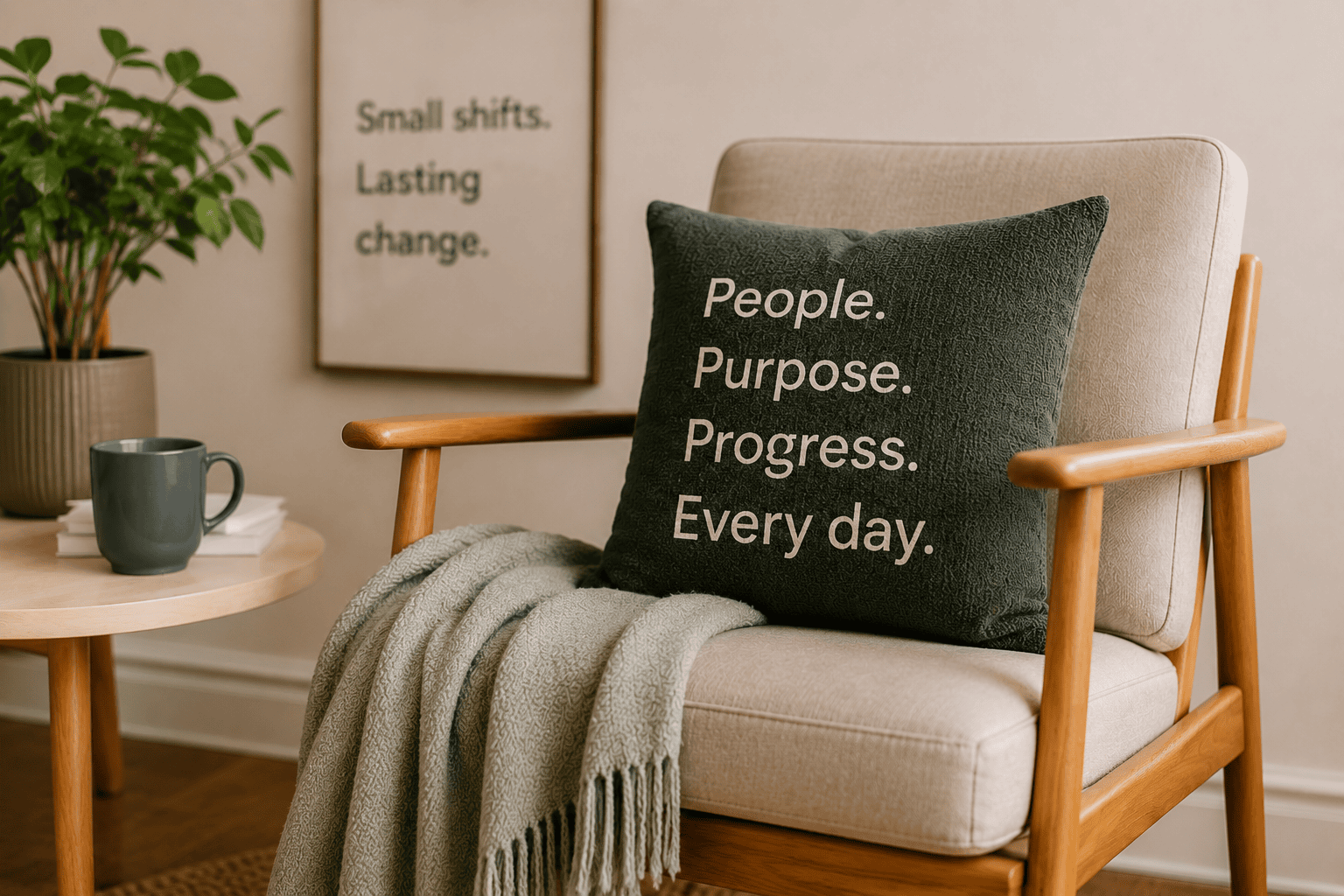
Embracing Sustainable Progress
If Mental Health Awareness Week felt a bit quiet this year, take a breath. It’s okay. You are planting seeds in soil that might need a little more tilling.
Turning a one-off week into a year-round reality isn't about doing more: it’s often about doing better. It’s about shifting from the "hype" of a campaign to the "depth" of a culture that prioritises human needs alongside business performance.
It is about reflections on mental health that lead to practical, systemic changes. It’s about accepting that progress is often slow and non-linear.
If you do not have a strategy yet, that does not mean you are behind. It may simply mean you need a clearer starting point. Often, the most useful first steps are small and honest:
- Listen to employees in a simple, low-pressure way and notice what keeps coming up.
- Map one "unspoken rule" in your culture, such as whether people feel able to switch off, ask for help, or take a proper break.
- Review your current "wellbeing list" and ask whether those offers are connected to a wider plan or just sitting alongside each other.
If you’re ready to move beyond the workshops and start mapping a culture that truly supports your team's nervous systems, we are here to help. We’re offering a free 30-minute strategy audit to help you turn awareness into action and get clearer on what practical, sustainable next steps could look like for your team.
How are you feeling after Mental Health Awareness Week? If you're ready to look at the "what next," book a free 30-minute strategy audit and let’s explore how to build a strategy that sticks.
